
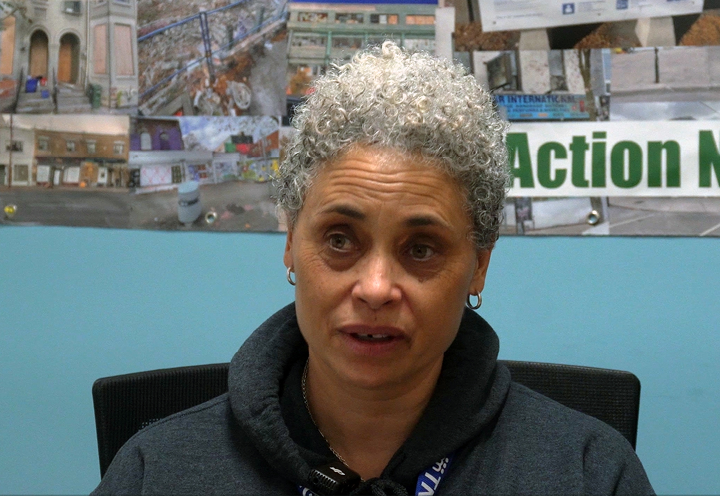
Through the Toronto Complex Behavioural Support Team, Mia uses her lived experience to help people in shelters move forward in their lives
“Substance use and homelessness were part of my life. I didn’t know why I’d get so unstable and self destruct, then pull myself back together, just to see it happen all over again.
“What really changed my life was being a TNGCS peer worker at a COVID recovery hotel. I knew through my lived experience that systems didn't work for me because they compartmentalized me. People look at the trauma but not at the whole person. But TNGCS takes a different approach. Peers work with people to create awareness and choice. They create an exit door to recreate yourself. That encouraged me to continue my path as a peer worker in hospital emergency rooms, helping people living on the margins get proper care despite overworked clinical teams, and stigma about substance use and homelessness.
“As peers, sometimes all it took was just listening to somebody's story and sharing our own. In that short time, we were able to get information that changed their trajectory of care. That’s when the light bulb went off for me. When you can relate to people's pain, you don’t judge them, you see them where they are. People get a different kind of energy from that.
“I continued at TNGCS and am now the supervisor of their Toronto Complex Behavioural Support Team (TC Best). The program supports shelter residents’ clinical needs through case management and restorative justice, which improves residents’ understanding of their behaviour. It shows the impact on others, and that understanding can be used to enhance communication to provide better outcomes. We also help train shelter staff so they can further the restorative justice process.
“Recently, one of our clients was banned from a shelter. But when their staff heard about TC Best, they were willing to readmit him because of the extra support. That never happens. Some residents have been in the system for years, so there are many layers to unpack. But with restorative justice, we can get to it. You can see people just go, ‘Wow. You're not going to punish me for these things. You're going to help me get my needs met.’
“It’s so exhilarating and really important. You don't always know the impact that you make, but eventually someone says, ‘If it wasn't for you, I don't think I'd be alive today. You helped me understand myself and get the care I needed.’ For me, that gave me power back. You lose a lot of power and a lot of yourself in substance use. It strips your identity away. You hollow out because your needs aren’t met. The real fundamental parts of us that make us want to get up and be part of society are stripped away because of the stigma and society’s misconceptions around substance use.
“Working as a peer gave me opportunities and a career path. I remembered myself. I remembered my desires, my creative energy and my higher-than-hope moments. I remembered my aspirations to contribute because that's innately human. We want to contribute and feel important. It doesn't have to be big, just a quiet influence that changes people. And that's what you get if you take the opportunities offered at TNGCS. You’ll find ways to change people's lives, and your own. You’ll find yourself.”
100%: Shelters in Toronto are typically at or above 100% capacity